Unleashing the Power of Generative AI:
Transforming the Enterprise Landscape

As the technological landscape evolves, generative AI has emerged as a significant driving force, revolutionizing how businesses operate and unlocking numerous benefits across industries. Generative AI models can produce contextually relevant and coherent outputs, such as text, images, or even designs, powered by advancements in deep learning and neural networks. In this post, we will explore the importance of generative AI in the enterprise space and discuss how it can propel businesses toward greater success.
Enhancing Efficiency and Productivity
One of the most notable benefits of generative AI in the enterprise context is its ability to boost efficiency and productivity. By automating repetitive and mundane tasks, AI models free up employees to focus on more complex and creative aspects of their work. For example, generative AI can assist in drafting reports, emails, or even social media content, significantly reducing the time and effort required for these tasks. This increased efficiency translates to cost savings and improved business performance.
Unleashing Creativity
One of the most significant advantages of generative AI is its ability to tap into the realm of creativity. AI-powered systems like OpenAI’s GPT-4 have shown incredible capabilities in generating coherent and contextually relevant text. These models can create anything from poetry to full-length novels, allowing writers to overcome writer’s block or explore new creative avenues. Similarly, generative AI models in the visual arts space can generate paintings, digital art, and even design elements for user interfaces.
Driving Innovation
Generative AI can play a pivotal role in fostering innovation within organizations. By generating new ideas, concepts, or designs, AI models can offer fresh perspectives and inspire novel solutions to existing problems. This encourages a culture of innovation, allowing businesses to stay ahead of the competition and maintain a competitive edge in their respective markets.
Empowering Data-Driven Decision-Making
Generative AI can significantly enhance decision-making processes within organizations by synthesizing vast amounts of data and identifying patterns that might otherwise be overlooked. By providing actionable insights, AI models empower businesses to make data-driven decisions, leading to better overall performance and strategic planning.
Personalizing Customer Experiences
A personalized and seamless customer experience is crucial to success in today’s competitive business landscape. Generative AI enables businesses to analyze customer data and preferences, generating tailored content, recommendations, and marketing campaigns that resonate with individual consumers. This personalized approach enhances customer engagement and satisfaction and increases the chances of conversion and customer loyalty.
Optimizing Supply Chain Management
Generative AI can significantly improve supply chain management by predicting demand, identifying potential bottlenecks, and optimizing inventory levels. By analyzing historical data and external factors, AI models can generate accurate forecasts, enabling businesses to make informed production, distribution, and logistics decisions. This results in reduced costs, improved efficiency, and increased customer satisfaction.
Revolutionizing Healthcare
Generative AI is a game-changer in the healthcare industry. By synthesizing vast amounts of medical data, AI models can identify patterns and relationships humans may overlook. This enables healthcare professionals to make more informed decisions and provide better patient care. Generative AI can also contribute to drug discovery, accelerating the development of life-saving medications.
Streamlining Human Resources
Generative AI can transform human resources (HR) management by automating and optimizing various aspects of the recruitment process. AI models can analyze candidate profiles, match skills with job requirements, and even generate interview questions tailored to each applicant. This saves time and effort for HR teams and helps businesses identify and attract top talent, ultimately leading to a more competitive and successful organization.
Facilitating Industry-Specific Applications
Generative AI can be tailored to address specific industries’ unique challenges and requirements. For instance, AI models can assist in drug discovery and diagnosis in healthcare by analyzing vast amounts of medical data. Generative AI can help detect fraudulent activities and optimize trading strategies in the financial sector. By harnessing the power of generative AI, businesses can develop industry-specific solutions that drive growth and success.
Summing It Up
Though we hear some very loud voices about the negatives of generative AI, there is no doubt that this is a world-changing time in our lives.
Like the invention of the printing press or the industrial revolution, we will need to stretch our minds and our imaginations about what is possible; we will need to re-imagine careers, companies, and entire industries; we will need to change education and learning styles, and most importantly, we will need to find our way forward, as generative AI is not going away.
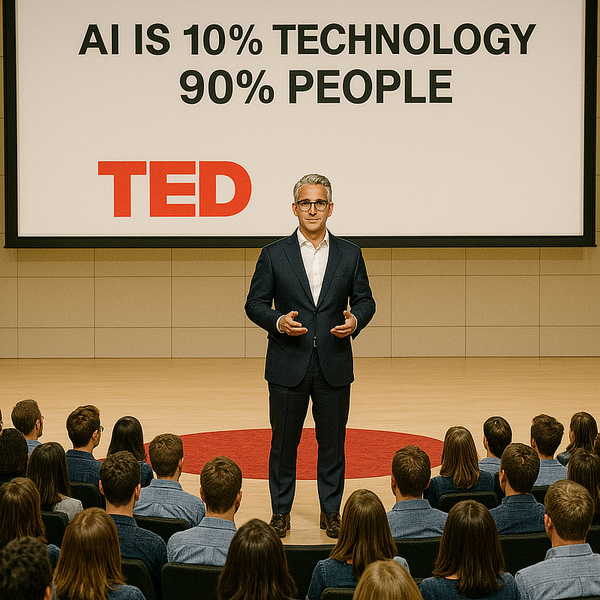
Remember that "AI is 10% Technology, 90% People."